Welcome to the Herefordshire Tree Forum
Championing Trees & the Green Environment in Herefordshire and beyond
See our Featured trees HERE
To navigate the site click on the image links above or use the menu at the top of the page. These will take you to a wealth of information about trees; their place in the natural environment; how they fit in to the legal and planning systems, what tree owners' rights and responsibilities are; how the problems that trees sometimes cause can be sensibly managed., how to look after them and, indeed, when they are best left to their own devices!

For Contacts, links to other organisations and for more information about the the Herefordshire Tree Forum
To see the latest Tree Work PLANNING NOTICES
For Tree News within & beyond the county
To see some of the Tree Council's Tree Talk articles
And if you have tree-related news and for any queries, contact us HERE
Upcoming Events
If you have tree news or event announcements, please get in touch CLICK HERE
Oct 28
Nature Reserve Work Party- Pool Ellocks
Nov 04
The Major Oak - legends never die. An Arboricultural Association Webinar
Nov 04
Guided Walk: Queenswood, South Wood and Burghope Quarry
Nov 14
Lea & Pagets Wood: a Day in the Wood
Nov 21 -
Nov 29
TREE WEEK
Dec 02
A talk on How to Successfully Establish Young Trees
Tree News
from within and beyond the county
For older Tree News and articles, CLICK HERE
and if you have any tree-related news, notices or queries, CONTACT US HERE

FREE CLIMATE RESILIENT TREES FOR YOUR COMMUNITY
An offer of up to five FREE trees to your local council
The summer of 2026 will be remembered for drought and extreme heatwaves, which placed trees under significant stress. This has highlighted the need to plant drought-tolerant trees to cope with extreme weather.
Herefordshire Council is pleased to offer free trees (with stake, natural tree tie, bio spiral guard, and bio weed mat) to be planted on land owned by your council (excluding highways, such as streets and lanes), local parks (charity-owned and council-endorsed), and schools within your parish.
If your parish or town council is interested in this scheme, which is funded by ring-fenced sustainability funding for climate resilience, please complete the attached application form by Friday 27 November 2026.
Note: Trees will be allocated on a first come, first served basis, as there is a limited supply.

Black Poplars: Thames Valley beginning to catch up with Herefordshire!
A project is aiming to help restore one of the UK's rare native trees across the Thames Valley using DNA testing: Conservation groups have warned numbers of black poplar trees have fallen due to decades of felling, land drainage and habitat loss.
The Swindon to Oxford: Regenerating the Thames and Tributaries nature recovery programme is working with local conservation groups to regenerate the population along the River Thames and its flood plain. Catrina Bass, from the Long Mead Foundation in Swindon, is involved in the project and said while the trees were "extraordinary survivors", there were just 50 recorded in Oxfordshire currently.
Herefordshire Tree, Hedgerow and Woodland Strategy (H-THaWS)
A SHARED VISION FOR HEREFORDSHIRE'S TREESCAPE
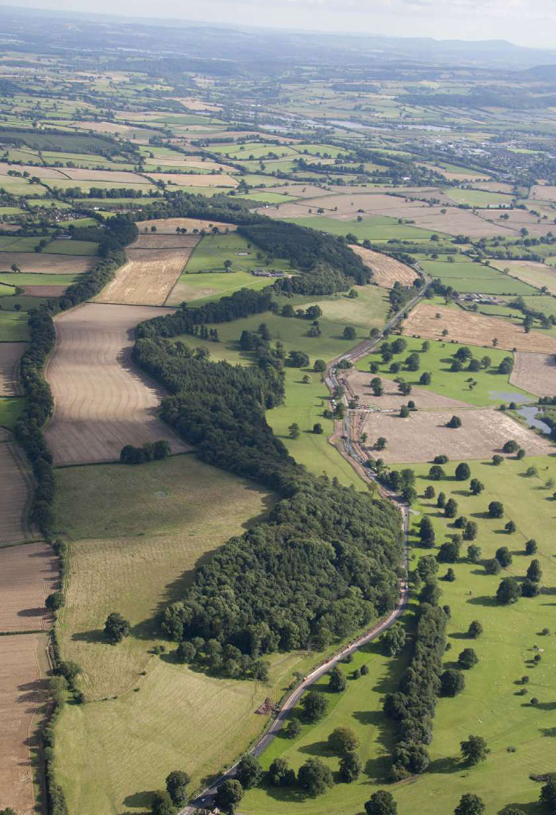
After a four week consultation was carried out by LUC (Land Use Consultants) on behalf of Herefordshire Council, the Herefordshire Tree, Hedgerow and Woodland Strategy has been published and is available for free download.
h-THaws is a strategic plan for the conservation, improvement and expansion of the county's treescape. The document focuses on both urban and rural areas, providing strategies to enhance the local environment, guidance on the management of trees and hedgerows as well as supporting increased planting, and improving the resilience of existing assets.

A citizen action movement in Berlin is saving street trees; called 'Water the Neighbourhood' (Gieß den Kiez) in German, might we follow suit?
As summer heatwaves intensify across the city, Amanda Gläser-Bligh carries about 20 litres of water to a lime tree outside her door once a week during the hotter months. It takes a couple of trips up and down stairs with a watering can to finish the job, but she has noticed the tree is no longer wilting in the summer heat. Lime, or linden trees are a hallmark of Berlin, even lending their name to Unter den Linden boulevard. Their mature, dense canopies offer essential street cooling, while their blooms provide vital nectar for local bees.
Gläser-Bligh adopted the tree through CityLAB Berlin’s Gieß den Kiez project, which translates to “water your neighbourhood”. An interactive map tracks more than 900,000 trees across Berlin and calculates the water needs of each one based on its age, species and local rainfall. This real-time watering data is what separates the Gieß den Kiez project from other tree maps around the world and allows volunteers to coordinate on a city-wide level.
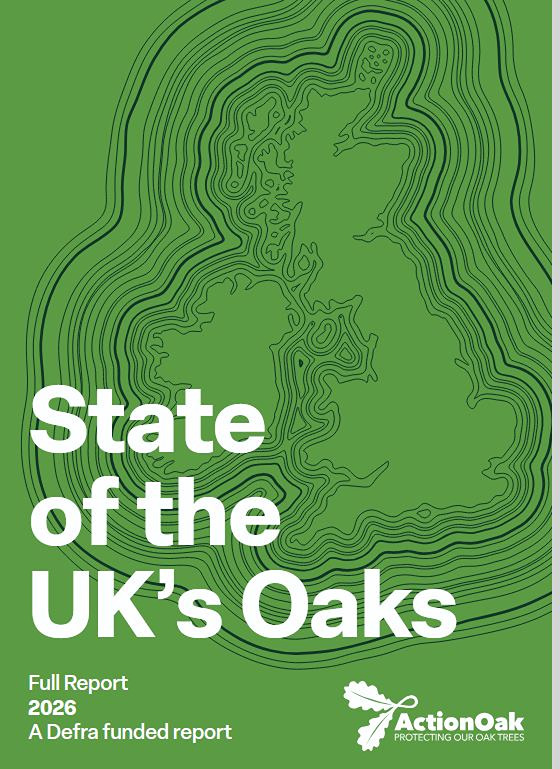
A Major new report from Action Oak reveals the UK’s most iconic tree is facing a convergence of threats unseen in modern times
Oak trees (Quercus spp.) are among the most iconic and ecologically significant tree species in the UK. They are a vital part of the UK’s biodiversity, cultural heritage and economy, supporting more than 2,300 species and contributing environmental, social and economic benefits estimated at £0.7 billion each year and yet relatively little is known about them, the threats they are facing, and how they are faring in the face of multiple stressors. The new report sets out the current state of UK oaks by bringing together key information, monitoring data and a review of existing work, while identifying important evidence gaps. It reveals the UK’s most iconic tree is facing a convergence of threats unseen in modern times, with scientists warning that without urgent action the UK risks losing oak as a defining feature of its landscape. This report deserves to be read by anyone with an interest in and concern for our native treescape

A local authority adopts a charter recognizing the rights of all trees.
Lewes, in East Sussex has approved approved a motion granting several rights to trees, including the right to life, to flourish, to be restored and to complete natural life cycles. It is one of a number of local authorities that have adopted motions and policies recognizing the 'rights of nature'. These ideas were set out as long ago as 1972 in a collection of essays by Christopher D. Stone under the tile "Should Trees Have Standing?" in which it was argued that natural objects, such as trees, rivers and oceans should be bestowed with legal rights.
Disappointingly, a British government official from the environment department told the UN in February 2024 that "The UK’s firm position is that rights can only be held by legal entities with a legal personality. We do not accept that rights can be applied to nature or Mother Earth. While we recognise that others do, it is a fundamental principle for the UK and one from which we cannot deviate.” The outright dismissal of applying legal rights to natural objects, a concept already recognised in UN declarations, was described as "shameful, contradictory and undemocratic", a point of view endorsed by Lewes Town Council's adoption of a toolkit developed by the Environmental Justice Law Clinic at the University of Sussex. While not legally binding, this would allow the council to make representations in planning decisions with the rights of trees in mind.

British oak trees in trouble: Finding solutions to the UK's oak generation gap
A Tree Talk Substack post from the Tree Council
Our two native oak trees in the UK, Quercus robur (pendunculate oak) and Quercus patraea (sessile oak) are an important part of the UK’s biodiversity, heritage, and economy, providing key services for the environment and society. They provide habitat for more than 2,300 other species including birds, fungi, insects, lichens, and mammals. 326 of these species are obligate, depending on pedunculate and sessile oaks for their survival. A further 229 are highly associated. But we have an Oak Generation Gap with middle aged oaks, 200-300yrs old, being scarce This generation gap disrupts the continuity of oak ecosystems and threatens the long-term survival of species that use oaks. Read on HERE
Does your Parish Council have a Biodiversity Action Plan yet?
Parish Councils have a duty to consider biodiversity in their decision-making and a Parish Biodiversity Action Plan (BAP) can help demonstrate that they are fulfilling this duty. Some helpful guidance for drawing up a Parish BAP with accompanying notes can be accessed by clicking on the button below.
TREES OUTSIDE WOODLANDS: comprehensive, free-to-use T.O.W. maps released for England and Wales
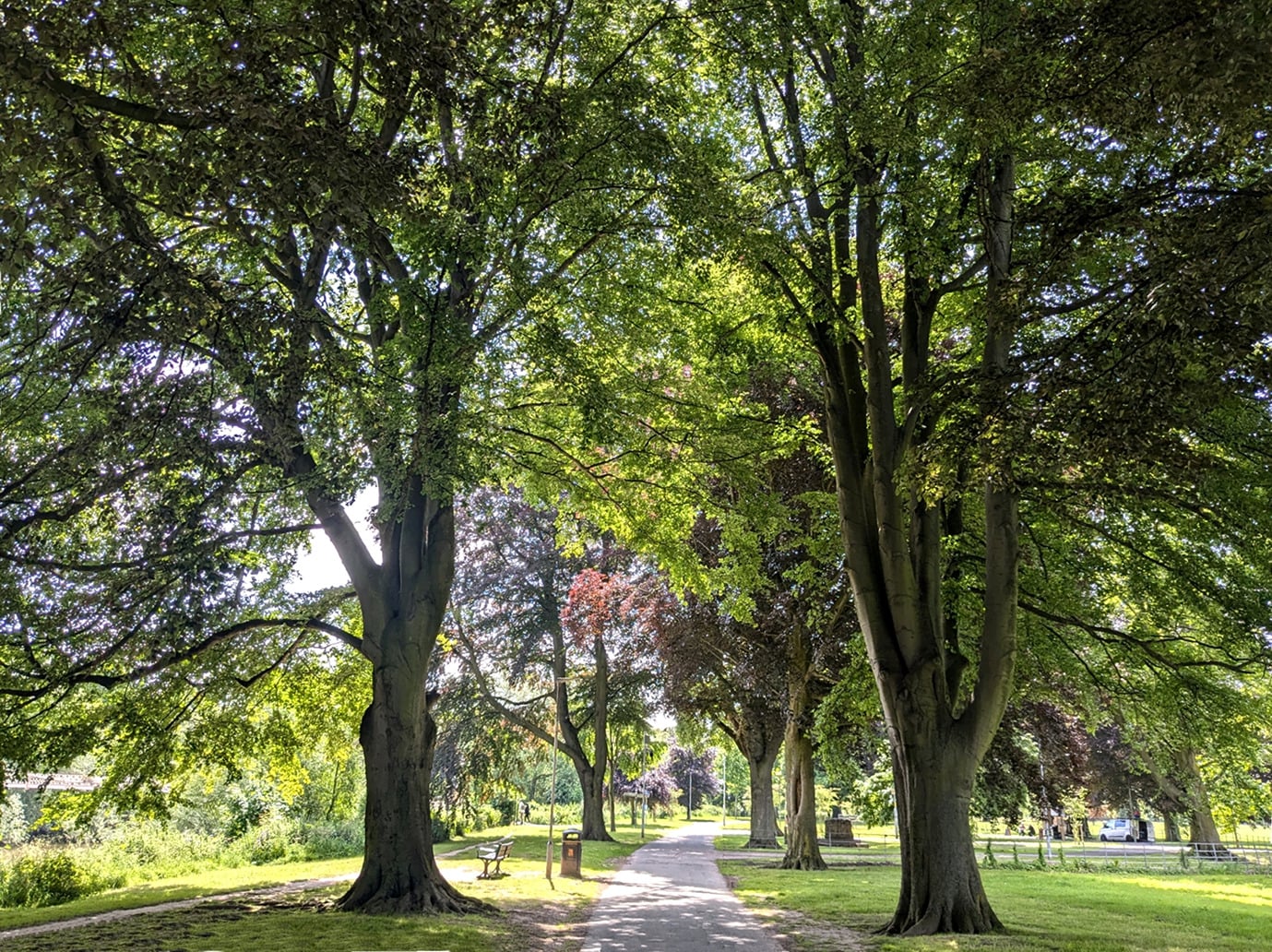
Trees outside woodland provide valuable ecosystem services such as habitat connectivity, carbon storage, and social and health benefits. Now available for all to access, the Trees Outside Woodland (TOW) map shows all trees taller than 3 metres and of area of greater than 5 sq.m, thereby picking up small woods, groups of trees and lone trees where they exist outside woodland. (Woodland trees are included in the National Forest Inventory)
This is the first time a national, free to use Trees Outside Woodland (TOW) map has been produced. Details of the project available HERE
Guidance on recognising & categorising Ancient & other Veteran Trees
The Woodland Trust has now has revised guidance providing a transparent and reproducible method to recognise and categorise ancient and veteran trees. It includes a one-page categorisation key to highlight their distinguishing characteristics, alongside more comprehensive guidance to support anyone to recognise and categorise these special trees.
Over time, different definitions of ancient and veteran trees have caused confusion in categorising them. This guidance seeks to clarify these terms, helping practitioners, volunteers, developers, planning authorities and nature enthusiasts to correctly categorise these living legends.
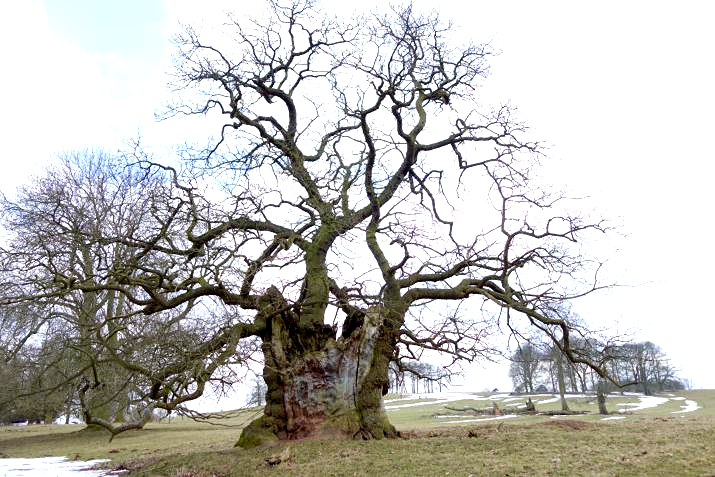
Observatree volunteers form a UK network of over 200 citizen scientists.
They undertake a range of surveys to assist with spotting new tree pests or diseases and monitoring the spread of existing ones.
Click on the image below to find out more
Tree Talk
A fortnightly Substack newsletter published by the Tree Council...
.... that provides expert insights on tree and hedgerow conservation, best practices in land management, community tree planting, and industry updates. The publication also features content on tree-inspired art, photography, and expert-led discussions.
CLICK HERE for the latest edition.
To find out more and subscribe to get regular Tree Talk newsletters direct to your inbox, CLICK HERE
Some recent featured articles are shown below.

The Changing of the Leaves
If you’ve been out and about over the past couple of weeks, you might have noticed one of the clearest natural signals of the seasons changing – the leaves of our trees turning colour. But why is it that some trees change the colour of their leaves and eventually lose them all each year, and how does this happen? Firstly, not all trees do lose their leaves every winter as some (like pines and yew trees) are evergreen. However, many of our trees across gardens, streets, fields and woodlands are deciduous and so will have bare branches for most of the winter. For a short time before they drop their leaves, we get to see the beautiful displays of fiery tones which are so symbolic of the autumn – but what is going on inside the leaves to produce this display? Read the full article by clicking on the link below

It's Seed Gathering Season
We're in Seed Gathering Season and Jon Stokes shares his thoughts on What Seed Gathering Season means to him , beginning, as is so often the case, with a chat in a pub and overhearing a group of bishops - as you do. So was born Seed Gathering Sunday, set as the second Sunday in October. While this gave people a focal point when they could to go out and collect seed, it was realised one day was too limited, as trees have a variety of seeding times, so that Sunday was stretched into Seed Gathering Season – taking it from the Autumn equinox, for a month.
Read the full article by clicking on the link below

Tree Health Forum - Spring & Summer 2026
Juniper is one of only three UK native conifer species Juniper (Juniperus communis) is an evergreen, dioecious conifer (meaning it houses male and female flowers on different plants), and is one of only three native conifer species in the UK. It has a long and rich history within folklore and mythology, but it’s probably best known for its dark purple berries used in gin and cooking. In 2010, scientists at Forest Research, detected that juniper was under threat from an invasive pathogen called Phytophthora austrocedri which was causing widespread mortality in English and Scottish juniper populations.
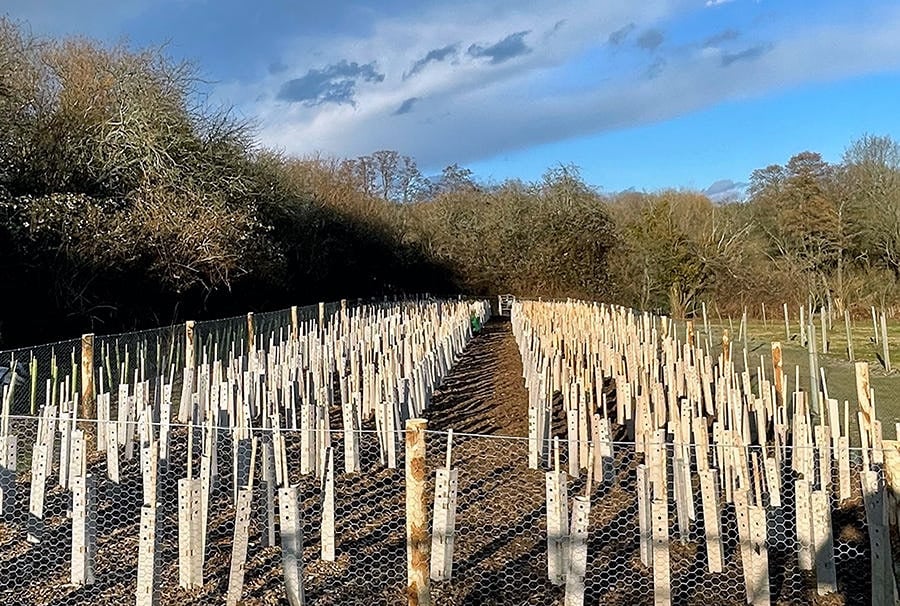
Tree Guards Part 1: Plastic & Part 2: Natural Materials
Over the next few years, millions of new trees will be planted across the country. Suitable protection for young trees is a conversation that is developing, as guards constructed from new materials are brought to market. Those planting have a responsibility to select tree protection which will not leave a lasting negative impact on the landscape. However, the matter is complex and a simple, widely-accepted solution does not yet exist. In this two-part Substack article, The Tree Council team discuss some of the issues to consider when selecting which guards to use .
CONTACT US
Herefordshire Tree Forum: [email protected]
Herefordshire Tree Warden Network: [email protected]
Herefordshire Ancient Tree Forum: [email protected]